
December 7, 2021
|
5
minute read
How to build customer loyalty




Customer loyalty is not built by a points program. It is built by understanding who your best customers are, why they buy, and what keeps them coming back.
The data makes the case plainly. According to Deloitte's 2025 Consumer Loyalty Program Survey, 72% of consumers say loyalty programs make them more likely to spend with their preferred brand, and 56% actually increase their spending because of a program (Deloitte, 2025). Top-performing loyalty programs boost revenue from members by 15 to 25% annually (Queue-it, 2026). Yet PwC's 2025 Customer Experience Survey found that nine in ten executives believe customer loyalty has grown in recent years, while only four in ten consumers agree (PwC, 2025).
That gap between what brands believe and what customers feel is where loyalty is actually won or lost.
Why transactional loyalty fails retail brands
Most loyalty programs are built around transactions: spend money, earn points, redeem for a discount. The problem is that this model rewards purchase volume without distinguishing between customer types. A discount-driven customer who buys twice a year because of a sale is treated the same as a VIP who buys monthly at full price.
Transactional loyalty also attracts the wrong behaviour. Discount-seeking customers accumulate points during promotions and go quiet the rest of the year. When the discount stops, so does the relationship.
Behavioural loyalty is different. It is based on the full picture of a customer's relationship with your brand: purchase recency, frequency, and value (RFM), category affinity, engagement patterns, and predicted future behaviour. When you build loyalty strategy on this foundation, you can identify customers who are genuinely committed to your brand and invest in them accordingly.
How to identify your most loyal customers
Before you can build loyalty, you need to know who is already loyal. RFM segmentation is the starting point for most retail brands.
RFM groups customers based on three behavioural signals:
- Recency: When did they last purchase?
- Frequency: How often do they buy?
- Monetary value: How much do they spend?
High-scoring customers across all three dimensions are your active high-value segment: the people most likely to respond well to loyalty investment and least likely to churn. Your customer segmentation platform should be doing this calculation automatically and updating segments in real time as customer behaviour changes.
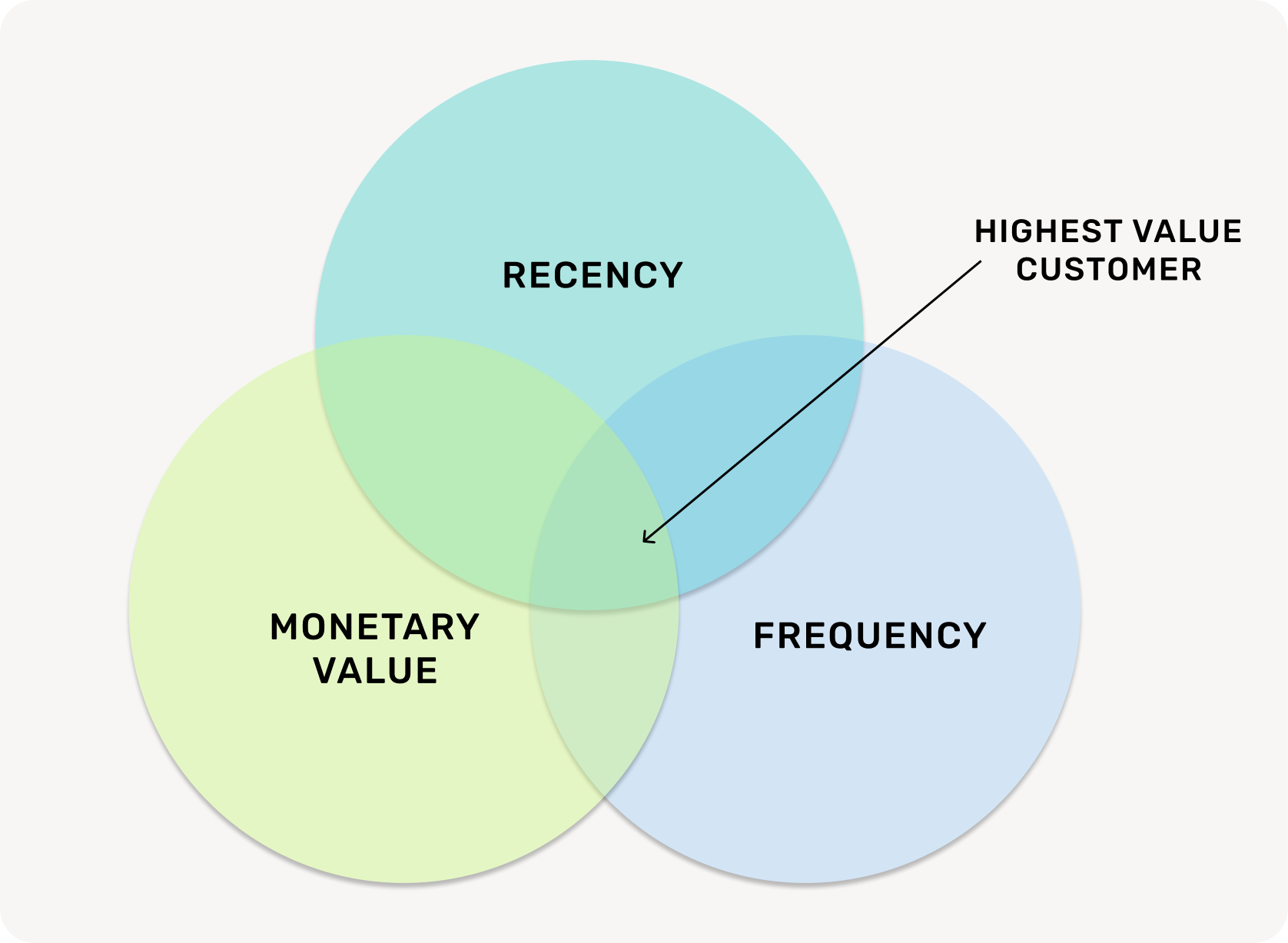
From this base, you can layer in additional signals to build a fuller picture:
- Category affinity: What product categories does this customer consistently buy from?
- Channel preference: Do they buy online, in-store, or across both?
- Engagement signals: Are they opening emails, clicking through to new arrivals, visiting the site between purchases?
- Predicted CLV: Based on current behaviour, what is this customer likely to spend in the next 12 months?
A customer with high RFM, strong category affinity, and a rising predicted CLV is a VIP, regardless of whether they are enrolled in your formal loyalty program. Treating them as one before they self-identify is one of the fastest ways to convert good customers into great ones.
How do loyalty segments improve retention?
Segmentation improves retention because it allows you to match your marketing investment to the customer's actual value and risk profile, rather than broadcasting the same message to everyone.
Consider three segments with different loyalty profiles:
High-value active customers have bought recently, buy often, and spend well. They do not need a discount — they need recognition. VIP invitations, early access to new products, and high-spend acknowledgements are far more effective with this group than a 10% off code. Research from Lexer's work with retail clients shows that high-value customers respond better to recognition than discounts; emotionally engaged messages consistently outperform price-led ones.
Mid-value at-risk customers used to buy regularly but have gone quiet. They need a reason to return that feels personal — not generic. If you know their favourite category has new stock, or that they have not repurchased within their usual window, a targeted message referencing that behaviour will outperform a mass promotional email.
Lapsed customers have not bought in an extended period and may have opted out of email. For this group, it is worth testing whether paid media retargeting using matched audiences from your unified customer identity resolution data can reach them where email cannot.
The reason this works is precision. When you know a customer's history and can predict their next move, your communications feel relevant rather than intrusive. And according to the EY Loyalty Report, 41% of consumers say rewards are the main reason they stay loyal ahead of product quality (Capillary, 2026). Rewards work. But they work best when they are matched to the customer, not distributed uniformly.
How to detect loyalty program gaming
Loyalty program fraud costs retailers an estimated $3.1 billion in redeemed fraudulent points annually (Capillary, 2026). The most common forms are:
- Points stacking: customers using multiple accounts to accumulate points faster than intended
- Referral abuse: fake referrals from the same household or device
- Return fraud: purchasing to earn points then returning the product while keeping the points
- Velocity abuse: making rapid, unusual transactions to hit tier thresholds before a promotional period ends
Detecting these patterns requires customer-level behavioural data, not just transaction logs. Signals to watch for:
- Multiple accounts resolving to the same address, device ID, or payment method
- Redemption rates dramatically higher than average for a specific segment
- Purchase and return patterns that cluster around loyalty milestones
- Referral activity concentrated in a narrow network of connected accounts
Identity resolution data, which links customer records across channels and devices, makes these patterns visible. Without it, gaming goes undetected because each record looks normal in isolation. With it, you can flag anomalies, set automated rules, and protect your program margins without penalising legitimate customers.
Integrating loyalty campaigns across channels
The most common failure in loyalty marketing is running channel-specific campaigns without coordinating the customer experience across them. A customer receives a VIP invitation by email, goes in-store to use it, and the associate has no record of the offer. Or they earn points online, try to redeem in-store, and the systems do not talk to each other.
Integrated loyalty campaigns require a single view of each customer that updates in real time across every touchpoint. That means:
- Unified profiles that connect online and offline purchase history, so a customer's in-store behaviour informs their online experience and vice versa
- Real-time segment updates so that a customer who crosses a CLV threshold today is recognised as a VIP today — not at the next batch refresh
- Channel orchestration so that the email campaign, the paid retargeting audience, and the in-store associate's clienteling tool are all drawing from the same source of truth
What is the difference between transactional and behavioural loyalty?
Transactional loyalty is based on purchase behaviour: earn points, redeem rewards, repeat. It is easy to measure and easy to game. Behavioural loyalty is based on the full relationship: engagement, advocacy, category commitment, and emotional attachment to the brand. Behavioural loyalty is harder to manufacture and far more durable.
The practical difference is in what you optimise for. A transactional loyalty program optimises for redemption rates and enrollment numbers. A behavioural loyalty strategy optimises for customer lifetime value, second-purchase conversion, and retention rates across high-value segments. The latter compounds over time in ways the former cannot.
For retail brands, the most effective approach combines both: use transactional mechanics (points, tiers, rewards) to capture attention and drive enrollment, then layer in behavioural intelligence to personalise the experience in ways that actually build attachment.
Examples of successful loyalty strategies
Sephora Beauty Insider
Sephora's Beauty Insider is one of the most studied loyalty programs in retail for good reason. With 25 million members globally, loyalty members account for around 80% of Sephora's total revenue; not because of discount depth, but because the program is built around behavioural segmentation rather than spend alone. Three tiers (Insider, VIB, Rouge) create clear progression incentives, with benefits at each level calibrated to what high-value beauty customers actually want: early access, exclusive events, and personalised product recommendations rather than generic coupons. The program also demonstrates a principle that holds across retail categories: emotional perks consistently outperform transactional ones at the top of the value curve. Read the full LoyaltyLion case study.

Starbucks Rewards
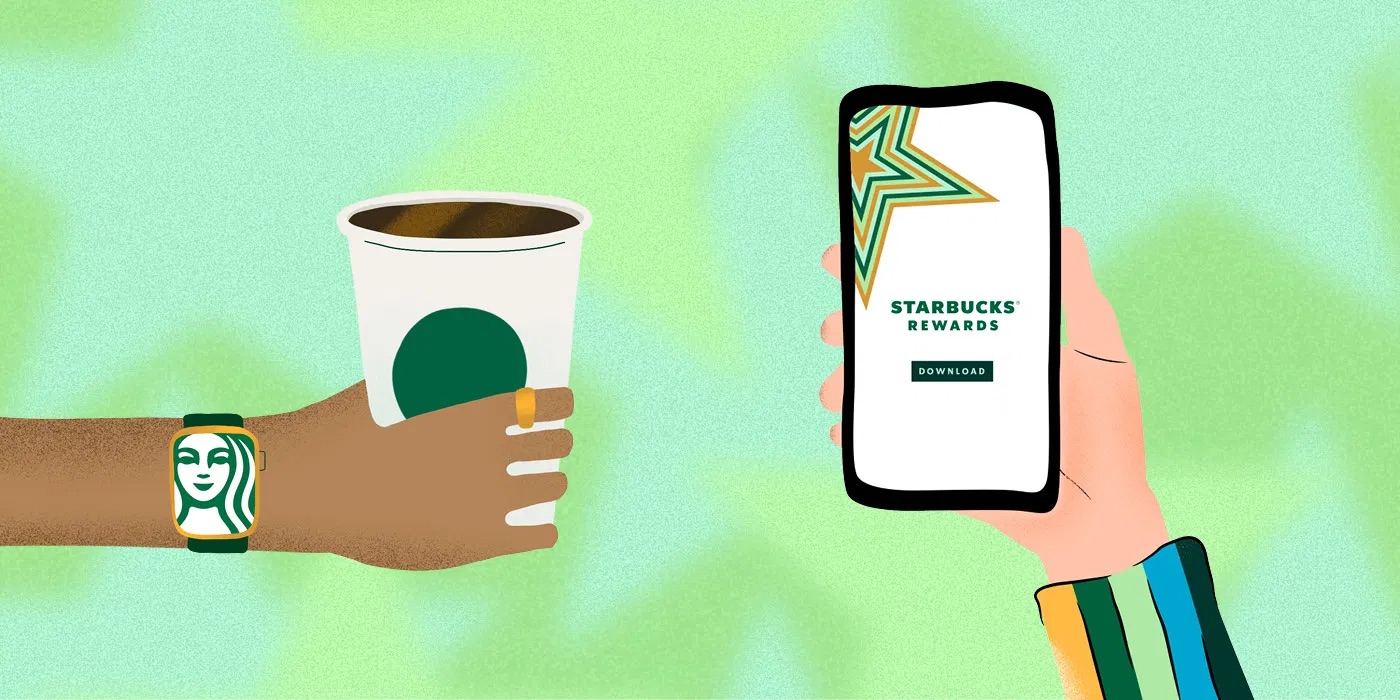
Starbucks Rewards has 34.6 million active US members and drives 59% of the company's total sales, making it one of the highest-performing loyalty programs in any consumer category. The programme's effectiveness comes from three things working together: a frictionless mobile experience that makes earning and redemption habitual, AI-driven personalisation that tailors offers to individual purchase patterns rather than broad segments, and real-time omnichannel integration so the experience is consistent whether a customer orders ahead on the app or walks in off the street. Members are 5.6 times more likely to visit daily than non-members. That frequency uplift is the direct result of treating loyalty data as a marketing input, not just a points ledger. Read the full LoyaltyLion case study.
The RFM guide
If you want to go deeper on segmentation-led loyalty strategy, the complete guide to RFM segmentation covers how to build, score, and activate RFM segments in a retail context, including how to handle customers who move between tiers over time.
For the retention side of the loyalty equation, the customer retention strategies guide covers early warning signals and intervention tactics.
Ready to build a loyalty strategy on real customer data? Book a demo to see how Lexer helps retail brands segment, identify, and retain their most valuable customers.
FAQs
How do you build customer loyalty?
Build loyalty by understanding which customers are already loyal (using RFM and behavioural segmentation), then investing in those relationships specifically: through recognition, personalised communication, and experiences that feel earned rather than generic.
What is the difference between transactional and behavioural loyalty?
Transactional loyalty rewards purchase activity. Behavioural loyalty is based on the full relationship: engagement signals, category affinity, advocacy, and emotional attachment. Behavioural loyalty is harder to replicate by competitors and more predictive of long-term retention.
How do you identify VIP customers?
VIP customers are identified through a combination of recency, frequency, and monetary value (RFM) scoring, overlaid with predicted CLV and category affinity signals. A customer with high scores across all three RFM dimensions, a rising predicted spend curve, and consistent engagement across channels is a VIP, whether or not they hold that status in your formal program.
Keep reading
Related resources
More from the Lexer library on the same topics.
.png)
.png)